One Backend, Three Digital Experiences: How Drupal + NodeHive Powers a Flexible Museum Ecosystem
Modern cultural institutions need more than a single website. They operate ecosystems of digital touchpoints—public websites, interactive experiences on-site, and dedicated platforms for partners and stakeholders. Managing all of that with separate systems quickly becomes expensive, inconsistent, and inefficient.
To show what’s possible with a modern headless architecture, we created a fictional museum use case demonstrating how one Drupal/NodeHive backend can seamlessly power three distinct digital experiences. The result: a scalable setup that keeps content teams fast, aligned, and in full control.
One Backend. Multiple Audiences. Zero Fragmentation.
In our demo, a single Drupal/NodeHive instance drives three museum-related products:
1. The Main Museum Website – For Everyday Visitors
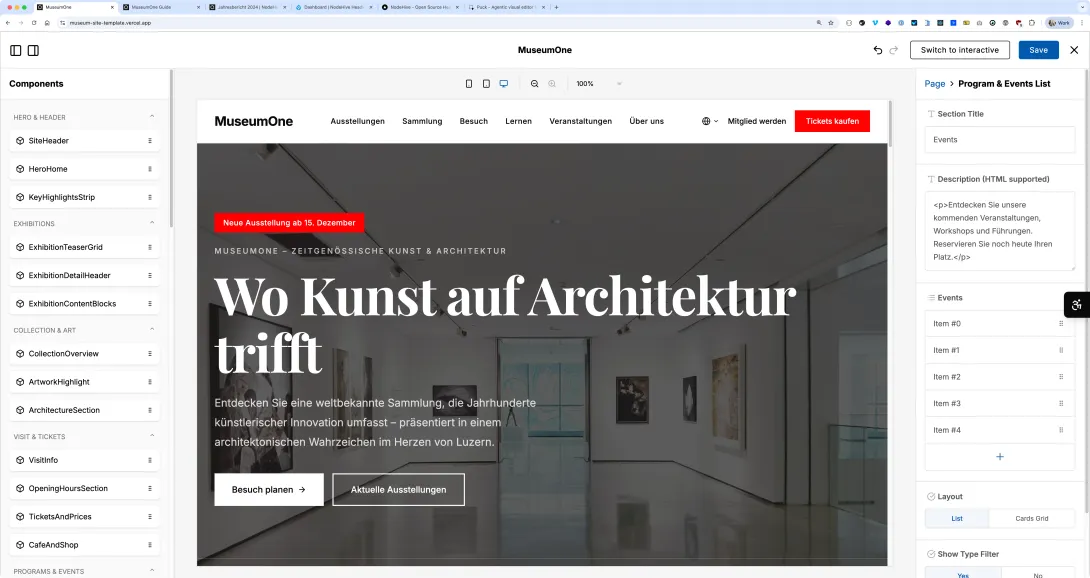
The public-facing website introduces exhibitions, opening hours, events, ticketing information, and stories from the museum’s collection.
This site uses a classic marketing-friendly template, ideal for communicating value and attracting visitors.
2. The On-Site Visitor Guide – For Guests Inside the Museum
This experience helps people navigate exhibitions and discover more as they walk through the museum.
Visitors scan QR codes or browse exhibits on their mobile devices, exploring rich multimedia content sourced directly from the same backend.
3. The Annual Report Website – For Partners & Stakeholders
A separate site template presents data, insights, and highlights from the museum’s yearly operations.
Clear design, structured storytelling, and modular content blocks make it easy to communicate with donors, partners, and cultural networks.
One Content Hub, Infinite Possibilities
While each of the three sites looks and behaves differently, they all share:
- One central Drupal/NodeHive backend
- One domain model and content repository
- Different frontends powered by the same content
- Independent site templates tailored to each audience
- A unified editorial workflow
This eliminates duplication and creates a unified content strategy across the entire institution.
A Better Editing Experience With Puck
At the heart of this setup is the open-source Puck editor, which turns Drupal/NodeHive into a rich, intuitive content authoring environment.
With Puck:
- Editors manage content for all three sites in one place
- Dynamic previews show exactly what the user will see
- Composable content blocks make updating pages simple
- Teams avoid the friction of switching between multiple tools
For museums—and any organisation managing complex digital ecosystems—this translates into real efficiency.
Why This Architecture Works So Well
This kind of setup is not limited to museums. Any organisation with multiple brands, touchpoints, or digital products benefits from a shared headless architecture.
Key advantages include:
Consistent content, everywhere
A single source of truth keeps messaging aligned across public, on-site, and partner-facing channels.
Lower development and maintenance costs
One backend to maintain. One infrastructure. Multiple frontends that can evolve independently.
Faster editorial workflows
Teams work in a unified environment instead of jumping between siloed systems.
Future-proof flexibility
Add new touchpoints—apps, kiosks, micro-sites, marketing campaigns—without replatforming.
A Glimpse of What’s Possible With NodeHive
This fictional museum demo is a simple showcase of a much bigger idea:
NodeHive and Drupal allow organisations to build flexible, scalable digital ecosystems—far beyond traditional website setups.
Whether you’re handling museum content, operating multiple brands, or running a multi-site corporate presence, NodeHive provides the foundation you need:
- A powerful open-source backend
- A headless architecture that grows with you
- Composable content for any frontend
- A modern, intuitive editing experience
If you’re thinking about building a multi-experience digital environment, we’d love to show you what’s possible.